
Is this accessible?
Adjectives and action often struggle to coexist.

Fishtown, where I live, has become Philadelphia’s little Brooklyn. We live on the northern end, where people SAY Fishtown, but it’s closer to Kensington, the drug epicenter that keeps Philly in the national news.
It used to be quiet. Now it’s a good day if there isn’t construction happening directly outside your window. (Today is not a good day.)
In the last few years, we went from having nowhere to get a cup of coffee to three very nice spots within a two-block radius. We also got two new restaurants. One is fine dining; the other is a family-run dumpling shop, takeout only.
One just announced their closing. Want to guess which?
What does accessibility mean to you?
This is not a review or a hate piece - not my style. Business is tough and this sucks for all involved.
The intersection of neighborhood and restaurant industry conversation is a bigger topic, and an uncomfortable one, but necessary. All people eat, not everyone drinks wine.
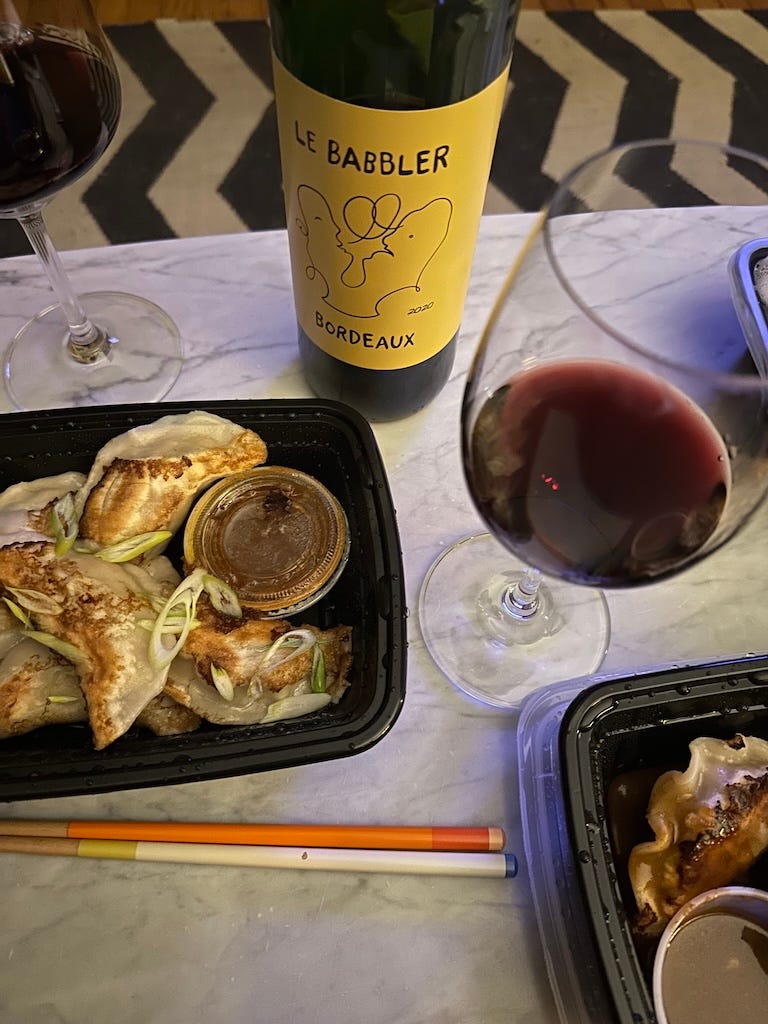
The dumpling joint is a dream. Great food, kind owners, very fair pricing for the quality, the sort of place that you just want to thrive. Their marketing is minimal, but it seems busy and I hope it stays that way when they reopen from a brief current temporary closure that has nothing to do with the operators.
The fine dining restaurant is the one closing in full. I’ve been twice. Once for a birthday meal that was nice but [respectfully] cost more than our daycare bill. More recently, I took a friend for happy hour. It was lovely, but empty.
Commentary online stated that the ownership wanted to do both destination fine dining and appeal to the neighborhood; only one initiative had been successful.
When this and similar spaces have come up in conversation at community gathering places, there’s echo in the commentary. “I wanted to like it…” and “I can’t afford to go all of the time” are the pertinent ones here.
Consumers are fully aware that the economy is shit and operating costs are bonkers. Real estate is brutal in this neighborhood. Many buildings have massive square footage, which constitutes a lot of seats / transactions to afford the rent.
This is where aspiration and accessibility struggle to co-exist. It’s also where there’s opportunity, if you approach as such.
Fine dining and a haunt for locals needn’t to coexist in every concept.
If I read one more article about rich developers bringing an “upscale yet accessible” concept to the neighborhood, I’m going to fucking scream. Most major Philly restauranters have introduced concepts up here. Know what we still lack? Reliably approachable bar/restaurants that you can go to on a regular basis with family and friends.
I’ll spend up where it makes sense. We buy dry bulk essentials at Costco for fiscal purpose, but produce from our local specialty shop. Doing the best you can with what you have + what you can responsibly afford is a norm now.
Accessibility isn’t offering something for everyone. It’s having the core offering make sense in multiple occasions, and at varied price ranges, so that not every visit is an investment. Do your specialty well, focus on range, adapt as needed. If the goal is to please everyone…that sounds exhausting and impossible.
Good / better / best.
Now I’ll relate this to wine. You can have the best list, the coolest bottles, whatever. That’s nice and appealing to a demographic of people who know what those wines are and are always seeking the hot new thing.
The risk? People are always watching for the hot new thing. If there’s always a new place to scout, will they come back?
Different words, similar example. Operators, have you tried putting that same effort into your entry tier? Like, REALLY tried?
When I managed retail wine, I agonized over the sub-$25 bottles. Having them is necessity; making sure they were good was a Pennsylvania feat. I poured customer samples myself at all the different stores. Listening to shopper feedback and watching what was getting repeat purchase over time was vital. It did more for the business than reading what cool kid allocations we had that week.
I still got allocations (limited offerings), but that was a luxury afforded by having regulars. One hand feeds the other.
Success comes from frequency and continuity, not just splurge. You can offer this without sacrificing quality, it just takes work.
If one person consistently buys a $20 wine once a week, that’s about $1k a year.
When they needed a nicer bottle down the road, they’ll likely trust a shop they already frequent. Say that adds six $50 purchases in the same year. Now that person is spending $1.3k per year and are likely telling others where they shop. There’s no better marketing than word of mouth.
Special occasion time! Graduation, holiday, engagement, whatever. Add two splurge purchases that are $200 each, bringing that one customer to around $1.7k annually.
Nothing special operationally happened for just that one person. The shops offered range. Good products speak for themselves, great customer service behooves all, regular business keeps the lights on. Nothing in business is easy; concepts like this are simple and proven.
Someone who loves cool shit may drop $500 in one purchase. Do you think they’ll do that often enough that it can make your business thrive? I don’t.
Easier said than done isn’t a reason not to do something.
I don’t know better than anyone about the inner workings of their business. I do know that my statements above come from these lived practices:
Research
Listening
Adjusting
Giving a shit
I’d like for a lovely restaurant around the corner from my house to thrive, really. Hopefully they beautify the street, support other area businesses, are kind to the neighbors and facilitate community. If those aren’t in your practice, you aren’t running a neighborhood spot.
Fine dining, and fine wine, need and deserve to exist. Don’t ignore that they’re a splurge for a majority of consumers. We’ll splurge when there’s trust, but it needs to be built first.